I’ve loved Vincent Van Gogh’s art since I was a kid and learned more about his life as a high school student. His vibrant colors, bold brushstrokes and emotional intensity have always resonated with me.
In September 2024 I traveled to Paris for the first time, representing the U.S. as part of an international art exhibition for the Paralympic Games.
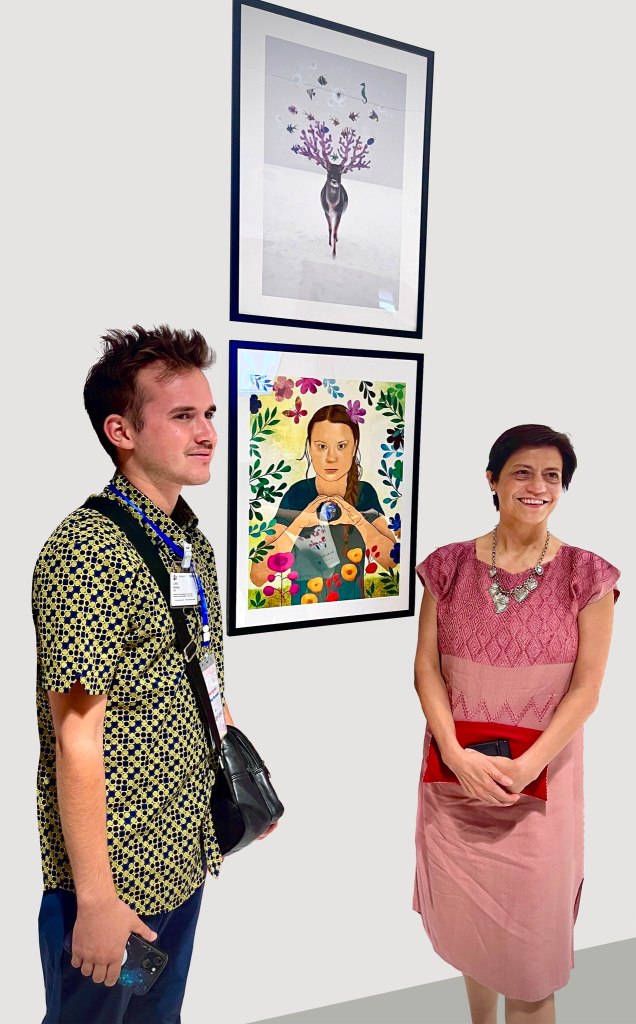
My artwork exhibited at OECD Headquarters in Paris with Mexican Ambassador Blanca Jiménez Cisneros.
I met inspired artists and athletes from five different continents, sharing ideas from different corners of the world.

Exchanging pins with gifted Paralympic athlete and wheelchair tennis star Maylee Phelps.
The city whispered its stories, the Eiffel Tower, Louvre, Musee d’Orsay, Arc de Triomphe, Notre Dame and Sacre Coeur.

Savoring the River Seine with my cousin Jorge from Mexico City.
After seeing many of Van Gogh’s works in Paris I knew I needed to embrace this chance. I hopped the train to Amsterdam, eager to immerse myself in the swirling colors and echoes Van Gogh left behind.
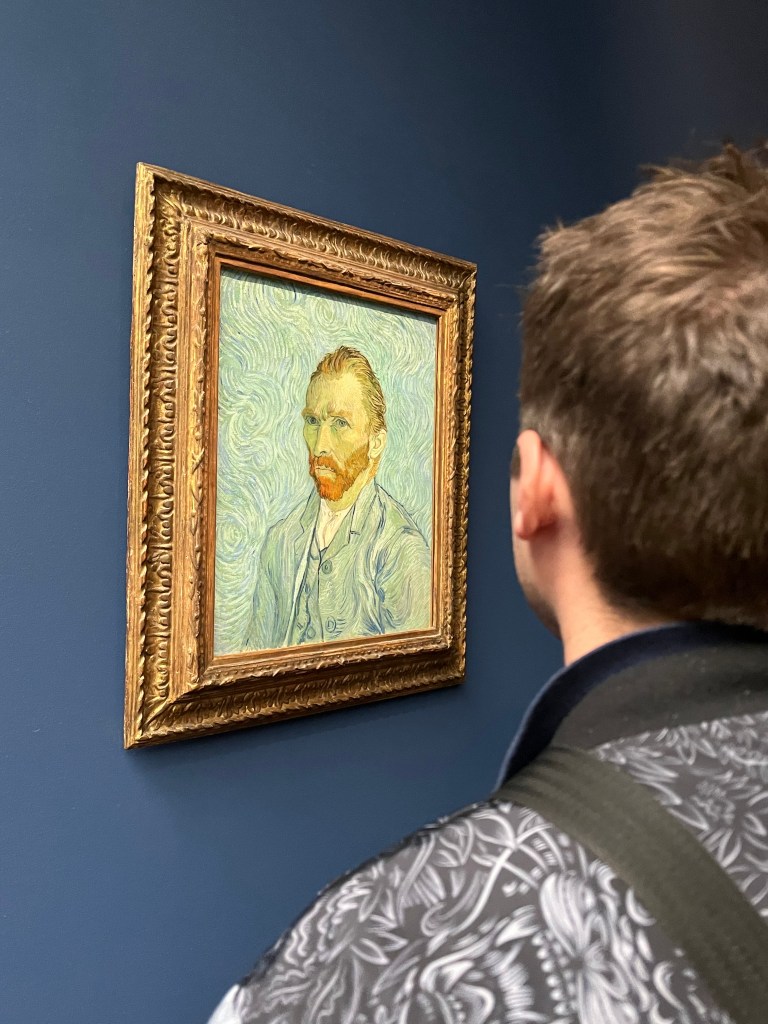
I’m an emerging artist with autism and as a sophomore taught myself to paint by copying his works then adding my own visual twist to each painting. Visiting the Van Gogh Museum felt like meeting an old friend.
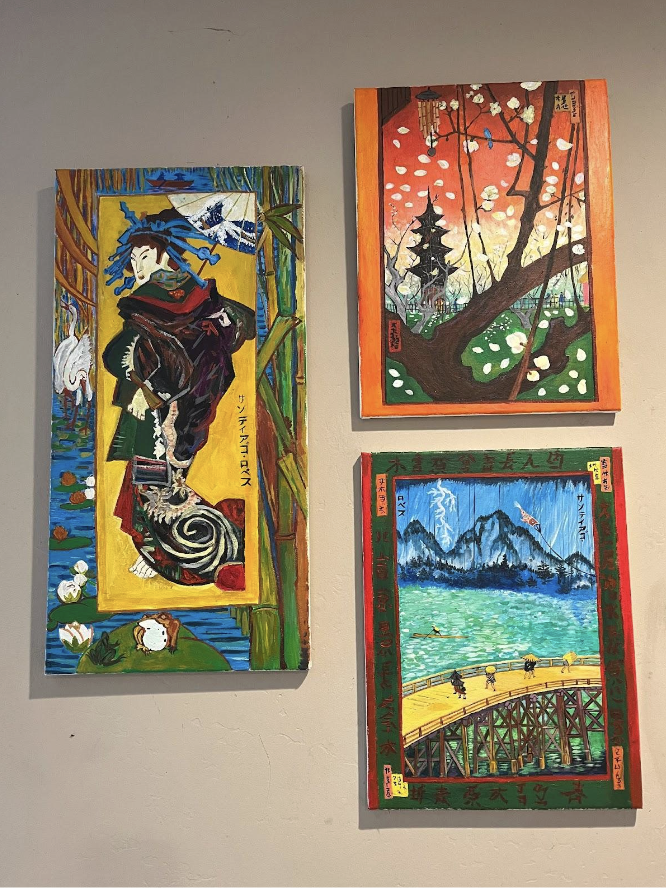
Vincent was inspired by Ukiyo-e and I’m inspired by him. Three early artworks I copied from Van Gogh.
My Journey with Van Gogh’s Art.
Van Gogh’s paintings inspire me. I find comfort in his swirling skies, expressive faces, and the way he brought life to everyday scenes. Copying his work at home back in my high school days helped me understand the power of colors and movement, and I felt a sense of connection beyond words. For me, art became a way to express myself, just as it did for Van Gogh.
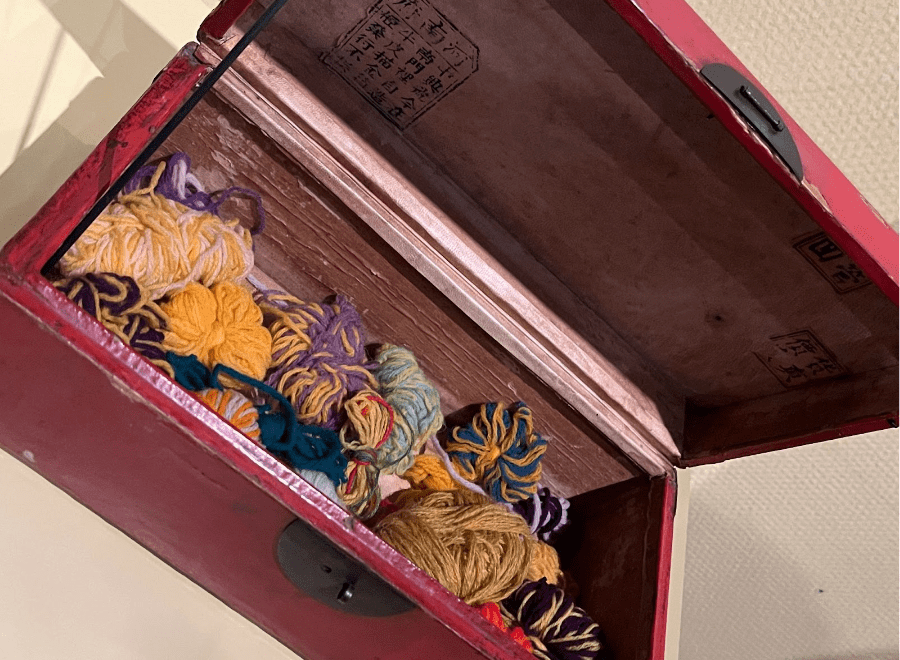
Red box with yarn scraps Van Gogh used to pick color combinations.
Van Gogh tested his color combinations with wool threads before using his precious paint. It’s amazing to think he used this red box and simple yarn scraps to create his stunning color combinations. A self-taught genius, he was relentlessly passionate about his craft. He first began painting in his late twenties after trying and not succeeding in several other jobs. His passion for art began when he opened an art dealers store in London run by his uncle where he worked as the shop’s apprentice selling paintings to clients. From then on decided he wanted to become a painter.
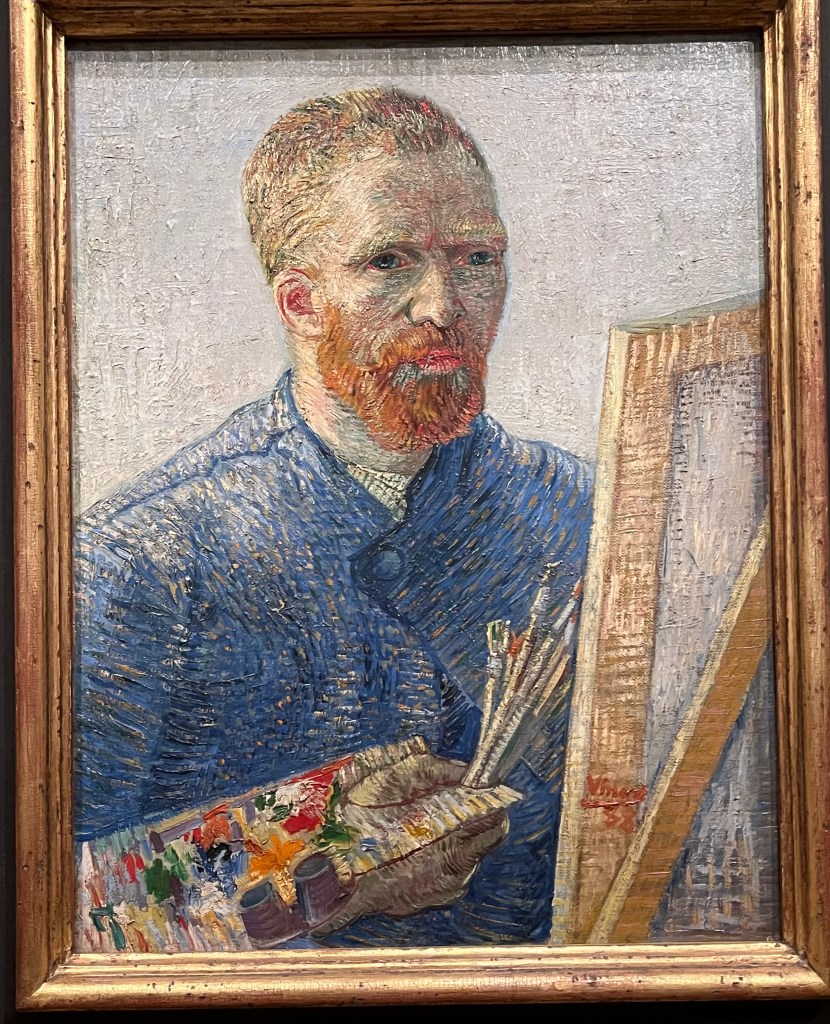
Van Gogh painted 36 self-portraits in his lifetime.
Vincent’s closest friend was his younger brother Theo who backed him up financially by sending him money to buy his paint and art supplies. The two stayed in close touch through letters. Growing up and working in the mid to late 1800s, Vincent’s art style was very rare and unique. Few people wanted to buy his work because it did not match typical art styles of the time. Now we recognize he was way ahead of his time. Despite his struggles, he created over 2,100 artworks, including several sketches stored in archival collections. This included 860 oil paintings crafted in just ten years. He managed to sell only one painting in his lifetime, The Red Vineyard but Vincent persisted. His passion and dedication reveal that art is rooted in the love for creation and the journey of finding a personal style, not merely about following trends or fitting in. It is safe to say that Vincent was ahead of his time as his art style marked the beginning of a new age for contemporary art of the next century. Making his work was like building the bridge to modern art.
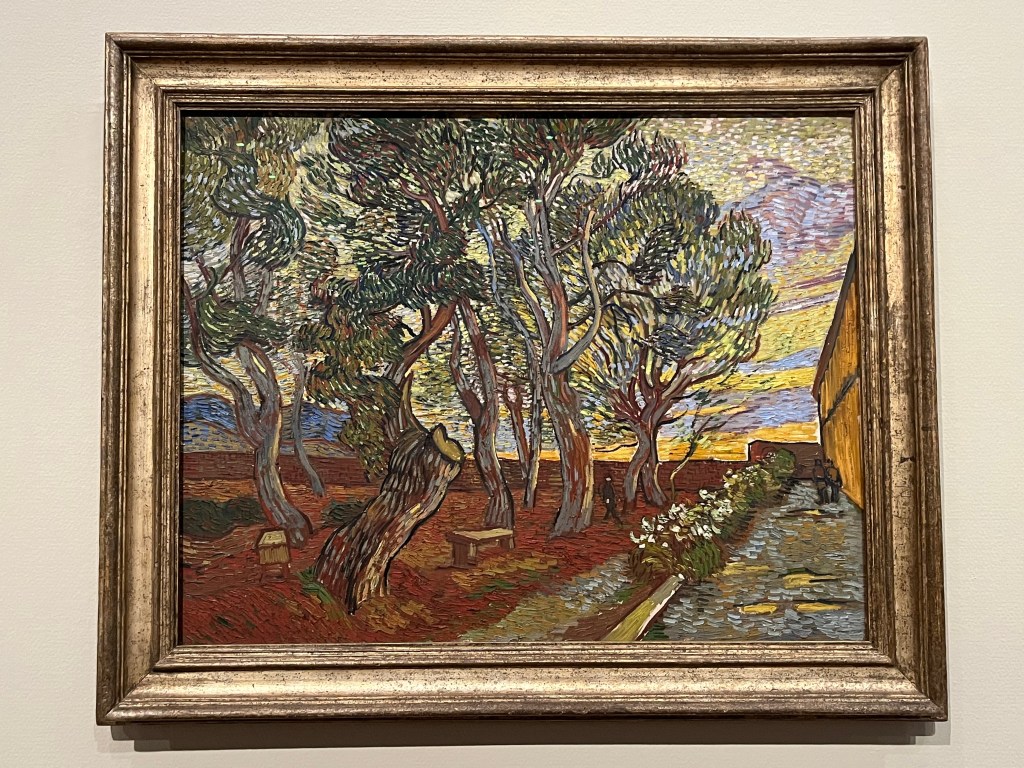
Rethinking Van Gogh.
People often think of Van Gogh as a tortured soul, but he also had periods of happiness and joy with a sense of hope. His letters to his brother Theo and others reveal a deeply thoughtful, passionate man who loved nature, books, and his family. He wrote about the joy he found in creating art and the peace he felt in the countryside. One of the last paintings he made before his death shows a wheatfield with crows.
The gloomy atmosphere and dark overcast sky above has been interpreted as a mirror of his tortured soul. For Van Gogh, this image was a symbol of life and renewal. His last painting Tree Roots shows a lush, vibrant exaggerated color palette and the energetic spirit of a painter on sunnier days.
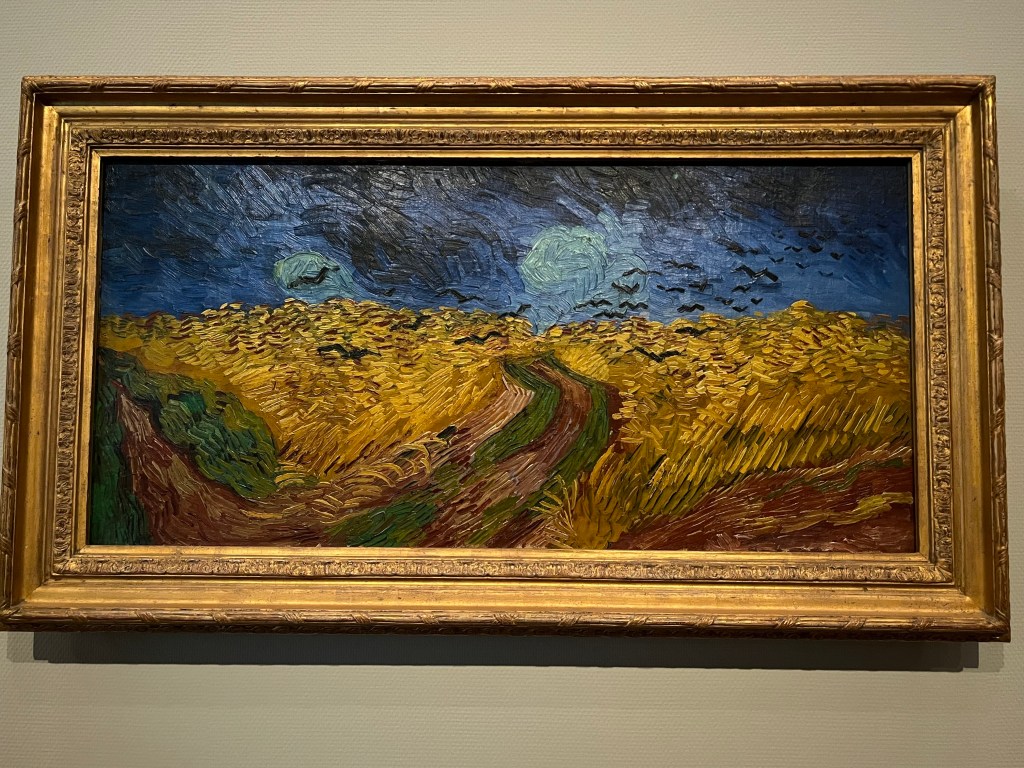
Wheatfield with Crows painted in 1890 near the end of Van Gogh’s life.
Van Gogh wasn’t just an emotional painter, he was also highly experimental. He was influenced by Impressionism and Japanese prints, which led him to explore color theory and composition. He believed that colors could express emotions and moods, and he used them to create energy in his work. When I use bright colors in my art, it’s like continuing his legacy of pushing boundaries and expressing emotion.
While people often think of Van Gogh as isolated, he actually built strong friendships with other artists like Paul Gauguin, the French painter of Peruvian ancestry who painted native Polynesian and Tahitian women of exotic islands. Van Gogh’s time in Arles, the French colony in southern France where he and Gauguin painted together was one of his most productive periods. He dreamed of creating an artist community—a place where creativity could flourish. This reminds me of how important it is to find people, discover allies who share your passion and understand your journey. Unfortunately for Vincent, his relationship with Gauguin deteriorated due to the differences between them. This led to Van Gogh cutting his own ear off with a razor in response while Gauguin left town in search of a new job.
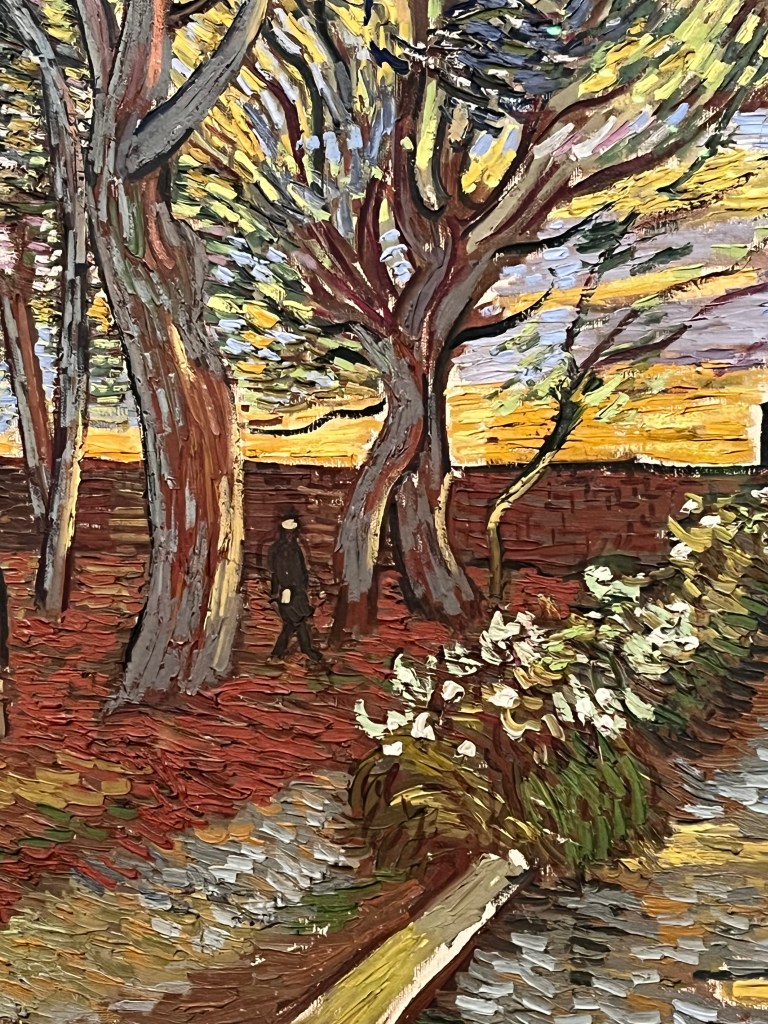
Following this incident and Gauguin’s departure, Vincent spent a whole year recovering in a mental asylum where he watched the seasons change. He worked on his most iconic paintings like the Starry Night which today is exhibited at the Museum of Modern Art in NYC. After leaving the asylum he returned to his brother Theo who was now married with a wife and newborn son. Vincent spent the last years of his life in the care of Dr. Gachet, a trusted physician who lived in the French countryside. Vincent painted his doctor’s portrait, not knowing that it would later become the highest priced painting ever sold just 100 years after his death.
Van Gogh struggled with mental health issues from an early age and was challenged to deal with bipolar disorder. Still his life is reduced to a stereotype and I believe that oversimplifies his story. He faced rejection and hardship, yet he continued to create, remaining committed to his work. In his own words, Van Gogh said “What would life be if we had no courage to attempt anything?” His resilience is something that inspires me as I navigate my own path in the art world.
Beyond the Canvas.
Walking through the museum and seeing his works up close felt like stepping into his world. The texture of his brushstrokes, the intensity of his colors and the rhythmic flow of his paintings all felt alive to me. It reminded me that even though Van Gogh faced many struggles in life, his art continues to bring joy, inspiration, and beauty to people around the world.
Many people don’t realize his sister in law Johanna is the woman who made Vincent famous following the death of her husband. Theo died a year after Vincent, and she inherited all his paintings. She also collected the letters Vincent and Theo wrote to each other over the years, making a vow to realize her late husband’s dream to make Vincent’s work known. Vincent’s legacy continued to flourish in the following years thanks to Johanna and his nephew named Vincent. He opened the doors to the Van Gogh Museum in Amsterdam, which houses a collection of his work to this day.
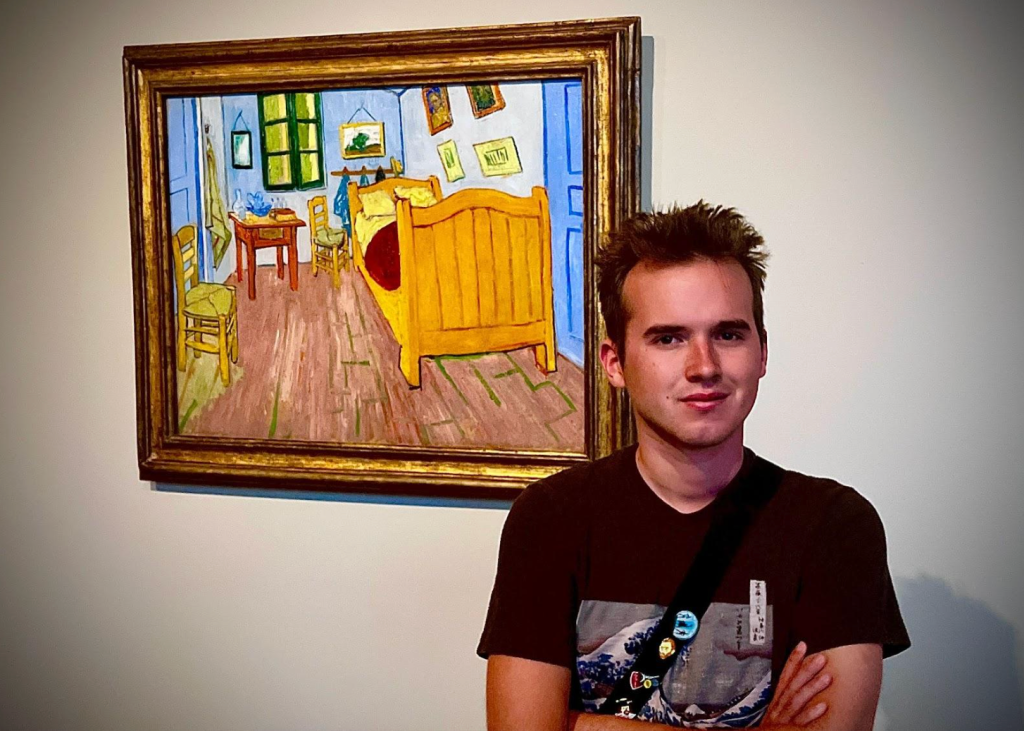
It’s easy to put artists into boxes, especially when they don’t fit into the expectations of society. Van Gogh was much more than his stereotype. He was a passionate, determined, resilient and unique individual who sought to change the world. As a neurodivergent artist myself, I see parts of my journey in his story, and I hope others can appreciate the complexity and strength behind his work.
Visiting the Van Gogh Museum in the Dutch city Amsterdam was a dream come true, but more than that, it reminded me why I fell in love with art in the first place. Van Gogh’s story is a reminder that we all have unique voices and perspectives to share, and that art has the power to connect us and inspire others, no matter the challenges we face.
 Santiago López Studio