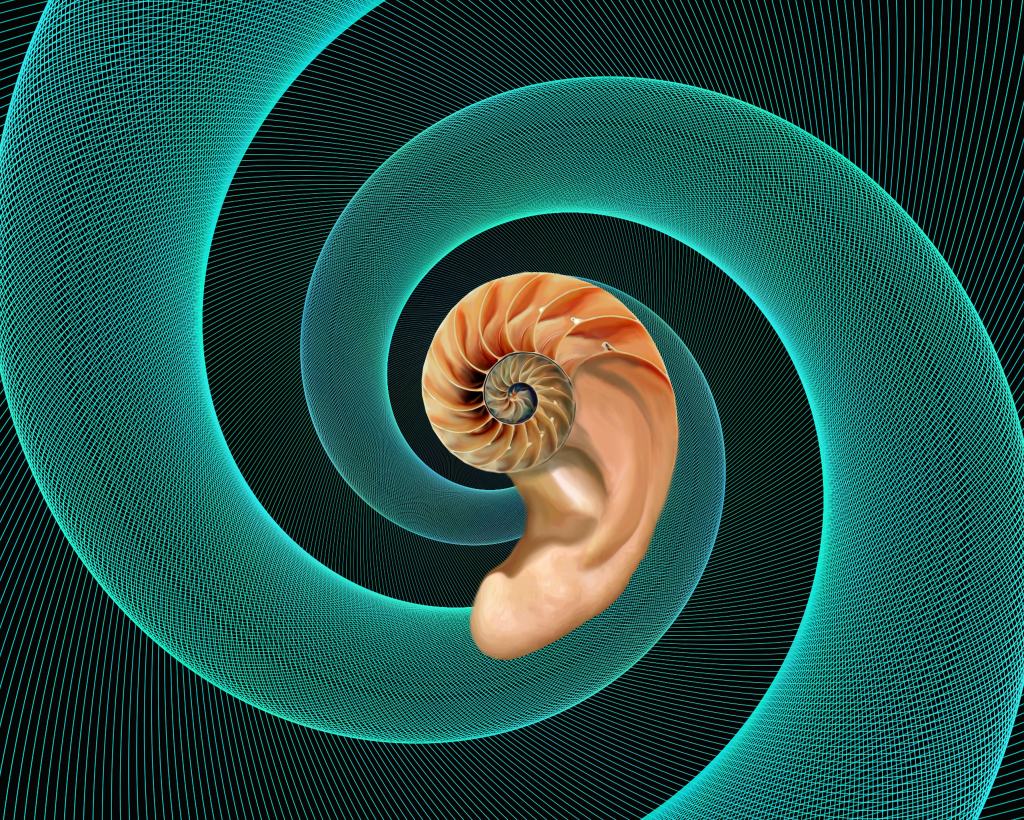
When people think of hearing, they often think of sounds like music, conversation, or the humming of the fridge at 3am. Hearing is more than what our ears take in. It’s how we interpret what we sense and process what’s unsaid. As someone with autism, hearing the world means something deeper, more mysterious and at times overwhelming.
I have two ears, but they’re visibly not the same. One curves sharply inward, the other fans out a little wider. They’re uneven, just the way I process the world. That asymmetry has become a personal metaphor for my neurodivergence, uniquely shaped and tuned differently.
I don’t always pick up what others do. Subtle hints, changes in tone or body language can be muffled, like reading shadows in shifting light. My focus lands on other things with clarity like the rhythm of footsteps, the buzz of light fixtures and even the emotional charge in a room when no one speaks. To many, this might seem intense but for me, it’s my default setting.
Some days the uneven creak of the washer shifting cycles can feel sharp. Other times, I lose myself in patterns like birdsong from the palm tree that sways over our patio like a lone dancer. These sounds don’t just enter my ears but land in my body like an echo in my nervous system. They linger. Social energy can get lost in translation. I practice recognizing sarcasm, but sometimes sense discomfort in the air like a sudden change in temperature. I may miss the expected response in a conversation but catch the weariness in someone’s posture or the subtle shift in their breathing.
Being autistic can feel like living on a different frequency band. I catch what others filter out and miss what others naturally notice. I don’t understand social rules intuitively, but can read the emotional texture of a room. A lot of everyday communication depends on picking up unspoken clues and reacting on the spot. I’m a late bloomer so understanding comes slower, but deeper. I may take longer to respond, not because I’m confused, but because I’m translating what I hear into my internal code, and that takes energy. It’s like waiting for a weak Wi-Fi signal to load the rest of the image.
What I want people to understand is that neurodiverse people are listening, just not always to the same things you are. We may not react the way you expect, but we’re noticing things. Sometimes these are things you might miss. Our ears are tuned to a different mix.
That’s where art comes in. Art doesn’t just rely on what’s plainly said or heard but speaks through textures, colors, rhythms, and silences that words can’t fully capture. For someone like me, art becomes a language that interprets those hidden frequencies I’m tuned into. It offers a space where the unseen and unheard find expression, where nuances I sense can be felt and shared without needing to be translated. Art is more than creating, it’s about connection. A bridge between how I experience the world and how others do. It’s where the invisible sounds become visible, and unspoken emotions find their voice.
 Santiago López Studio