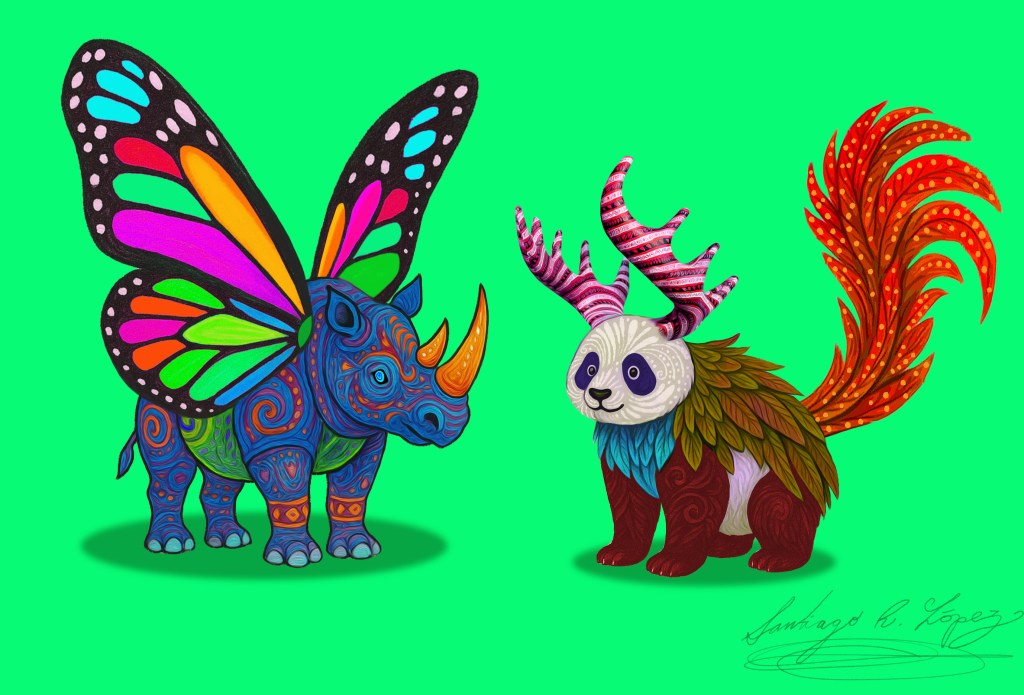
If you’ve ever walked through a Mexican mercado or artisan shop, you’ve probably seen them. Fantastic creatures with wings, tails, horns and scales, painted in vivid patterns. An alebrije might be part jaguar, part fish like a mermaid, part eagle or any fantasy creature that could only exist in dreams. They are playful, otherworldly, and powerful all at once.
Living in San Miguel de Allende part-time, I often get inspired and fascinated by the arts and crafts work all around me. The story of alebrijes begins with an artist named Pedro Linares in Mexico City back in the 1930s. When Linares became ill with a fever, he experienced a lucid dream where he found himself transported to a strange magical forest. Out of the rocks, clouds, and trees came creatures unlike anything he had seen before. These creatures were a mix of real animals with surreal fantasy elements, a hybrid mutation blending both the ordinary with the impossible, and in his dream, they shouted their name “Alebrijes”. When Linares recovered, he brought his vision to life, first by crafting paper-mache sculptures of these fantasy creatures from his dream before sharing them to the public. Soon, his idea spread, inspiring generations of artists across Mexico. In Oaxaca, artisans began carving them from copal wood, giving the Alebrijes new form and texture. Today, every artist in each region brings their own voice to life with the old tradition.
My own artwork of Alebrijes shows how they blend ideas, by putting the familiar in an unfamiliar setting and exploring surreal concepts. One thing I love about these creatures is the fact that they aren’t just animals but shape shifters. As shown in my own illustration, we may see a rhino sprouting monarch butterfly wings or a panda with antlers and feathers complete with a rooster’s tail. When it comes to Alebrijes, every piece feels like an invitation to imagine beyond the limits of the ordinary world. Some say they are protectors, spirit guides, or reminders of the thin line between the real and the imaginary. For me, as an emerging young artist with autism, they feel like friends who speak in my own language, a surreal language of patterns, colors, and possibility.
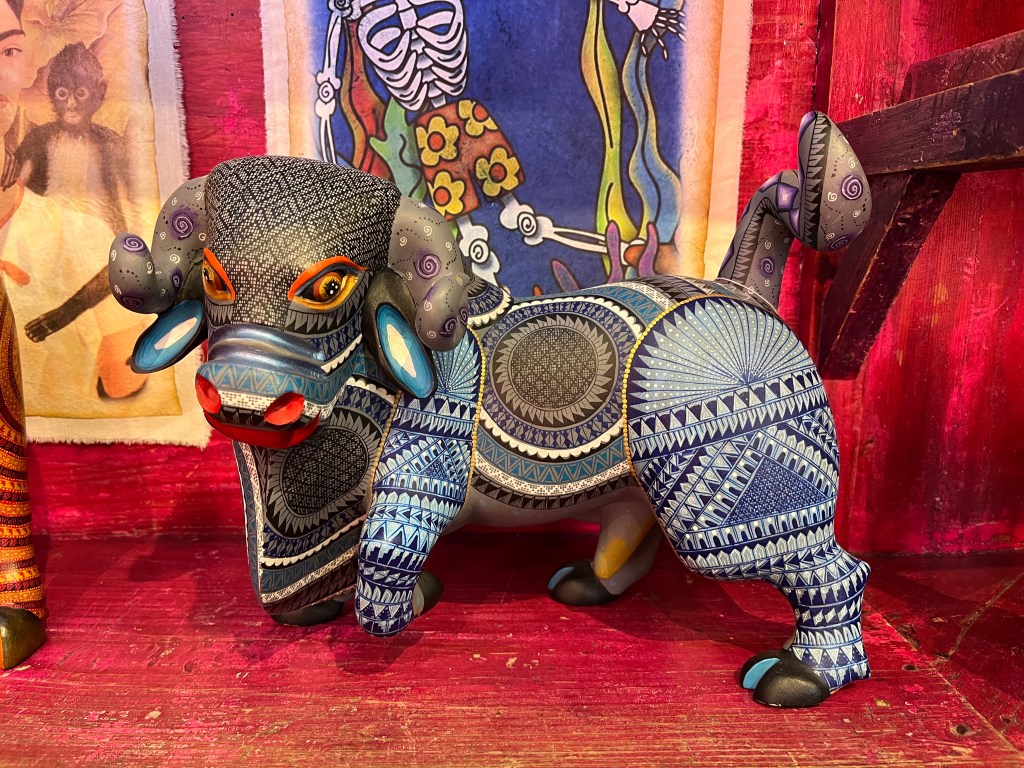
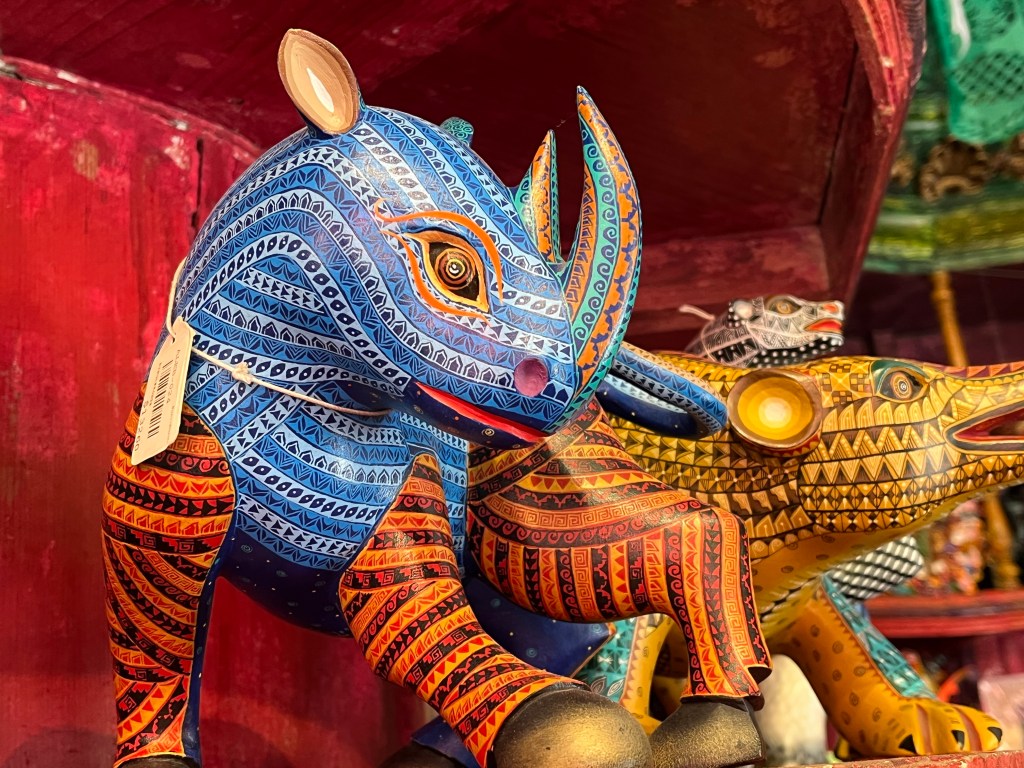
Creating an Alebrije is a slow, careful process. If they are made from paper-mache, thin layers of paper and paste are shaped into wings, tails, and horns, then left to dry before they are painted in bold designs. If it’s wood, the carver studies the natural bends and knots of copal, letting the shape suggest what kind of creature might emerge. What makes these creatures come alive is the paint and the decoration process. Every dot, swirl, stripe, and zigzag builds a rhythm. When I look at this art form, I see movement, music, and imagination.
The creatures themselves take endless shapes. Jaguars, coyotes, dogs, and armadillos often sprout wings, horns, or dragon tails. Birds like owls, eagles, and parrots appear with exaggerated beaks or reptilian features. Reptiles including snakes, lizards, or crocodiles become patterned tapestries, sometimes fused with insects or mammals. Sea life and butterflies merge with land animals, while dragons and mythological beasts are conjured from pure invention with fiery wings, extra eyes, even multiple heads.
As a young artist, I find myself inspired by these creatures. They remind me that art doesn’t need to be confined to what’s real. It can leap, roar, fly, and invent. Alebrijes were born from a dream, and they continue to dream through the hands of every artist who creates them. To me, they are proof that imagination is just as real as stone sculptures, wood carvings, or paper models.
Pronunciation: “Ah-leh-bree-heh”
 Santiago López Studio