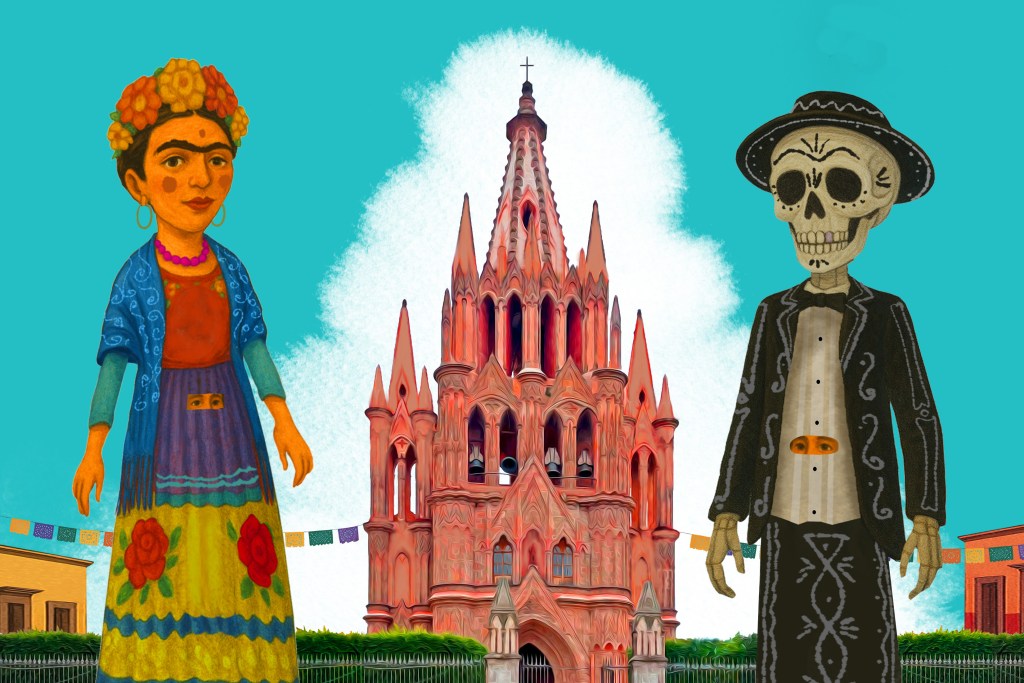
When I was a child wandering the cobblestone streets of San Miguel de Allende, I remember the first time I looked up and saw them, towering, colorful figures swaying high above the crowd called mojigangas, pronounced Mo-hee-gong-gus. To me, they felt like a dream come alive, part parade, part performance, and pure joy. They were bigger than life and made me realize that artists can create magic.
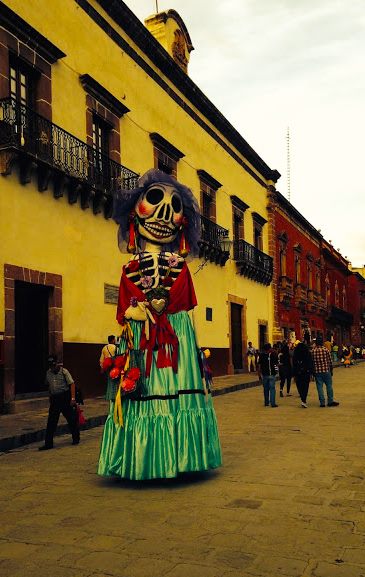
Mojigangas have a long and fascinating history. They first appeared in Spain in the 16th and 17th centuries as satirical street theatre, with actors dressing in playful or grotesque costumes accompanied by music. When this tradition came to Mexico during the colonial era, it evolved into giant paper-mache puppets that danced their way through festivals and religious processions. Over time, they became uniquely Mexican and deeply tied to our culture.
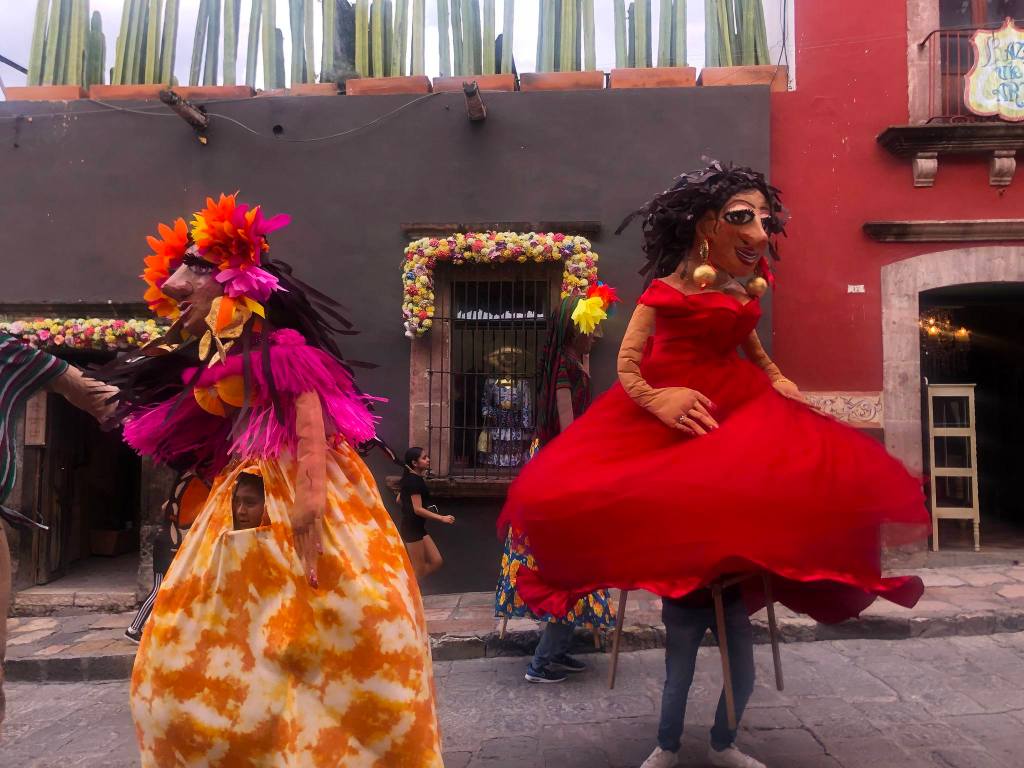
At the heart of these giants is the art of cartonería, the craft of sculpting with cardboard and paste. Artisans build a frame of wood and wire, layer it with paper and fabric, and then paint it in bright bold colors. The result is a large puppet with a huge, exaggerated head and expressive personality. Dancers peer from cutouts in the fabric of the figures garments. They carry them on their shoulders using springy straps and control the movements of the puppets from the inside. Nowadays they often use rubber tubes for the inner frame structure so the giant puppets can bounce around and sway with the rhythm of the procession.
Growing up, I loved how they were more than just decorations. They felt alive. They could be funny or playful, sometimes a skeleton, sometimes Frida Kahlo or La Catrina. Sometimes a wedding couple leading a musical parade or callejoneada that winds through our streets. I was fascinated by these towering giants parading through the streets of town. Staring up in awe I returned home to draw sketches of them in my notebook.
Here in San Miguel, no one has shaped this tradition more than artist and craftsman Hermes Arroyo Guerrero. Born in 1970, Arroyo learned from the works of a master Genaro Almanza. He then transformed the art by making the structure lighter to carry for costumed performers by adding springy shoulder straps to make the puppets bounce around in lively and somewhat mischievous ways. His mojigangas have not only danced in our town fiestas and parade processions among the locals, but have also become international attractions in popular media. They even appear in the opening sequence of the James Bond film Spectre. Hermes also teaches workshops and lectures to his students, passing on ideas so the craft continues to thrive.
Today, mojigangas aren’t just used for town parades and festivals, they also show up at weddings, business openings, and celebrations of all kinds. Many couples commission craftsmen to build and design puppets of themselves for their wedding ceremony, complete with traditional bride and groom attire to lead their wedding processions. Each one is a blend of art, humor, and spirit, costing anywhere from $300 to $900 US dollars depending on the size and complexity of the design. I believe this art form is a priceless gem because it manages to capture the heart of a celebration.
As an emerging young artist with autism, I find inspiration in their immense scale, rich vibrant colors, design patterns and their exaggerated bold personality. They remind me that art doesn’t have to stay small or silent for viewers to observe. It can take up space, make people laugh, make them dance, and bring strangers together. I created this illustration to go with my post as a way of honoring these towering costumed puppets that have always captured my attention and imagination. Mojigangas are giant reminders that when art and tradition meet, magic happens.

 Santiago López Studio